Executive Summary: Small Details, Big Impressions
Luxury travel lives in the feeling of being cared for, the scent of the room, the touch of fine linen, and the taste of that first wonderful, welcome bite.
Torn Ranch’s Hospitality Perception Study surveyed 207 U.S. travelers, age 21 and over, all of whom had stayed in a premium or boutique hotel at least once in the past year. The study aimed to understand how guests interpret the quality, presentation, and sourcing of amenities, and how these details influence their perceptions of luxury, care, and brand loyalty.
The results reveal a clear pattern: guests notice small things—and those small touchpoints make a significant difference. Quality, packaging, and presentation of amenities consistently served as powerful cues of care and craftsmanship, on par with the room's visual design.
Who We Surveyed
We surveyed 207 qualified guests who had stayed in a premium or boutique hotel at least once in the past 12 months in the US, all of whom were aged 21 and over. The sample skews leisure: Leisure 72% (150) and Business 28% (57). These travelers have enough experience to recognize quality and enough emotional engagement to remember moments that feel special.
Why This Matters to Hospitality
In hospitality, differentiation rarely comes from technology or simple square footage. Today, authentic luxury is built from intention, from the subtle signals that convey, “This place cares.”
In-room amenities are among the details that every guest directly interacts with. The choice of the curated snacks or treats can make a stay feel warm, personal, and refined, or can also appear indifferent, transactional, cheap, and inconsistent.
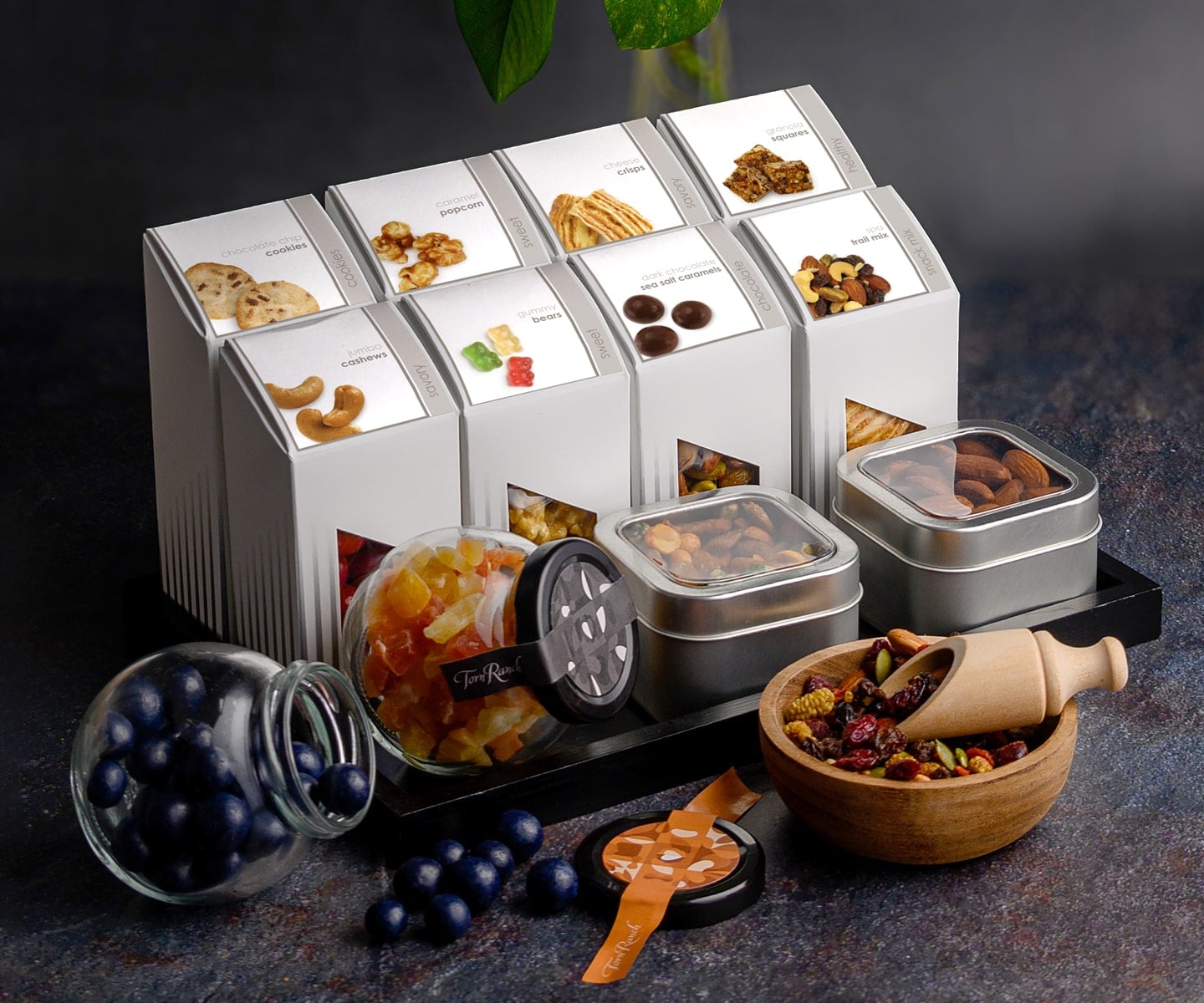
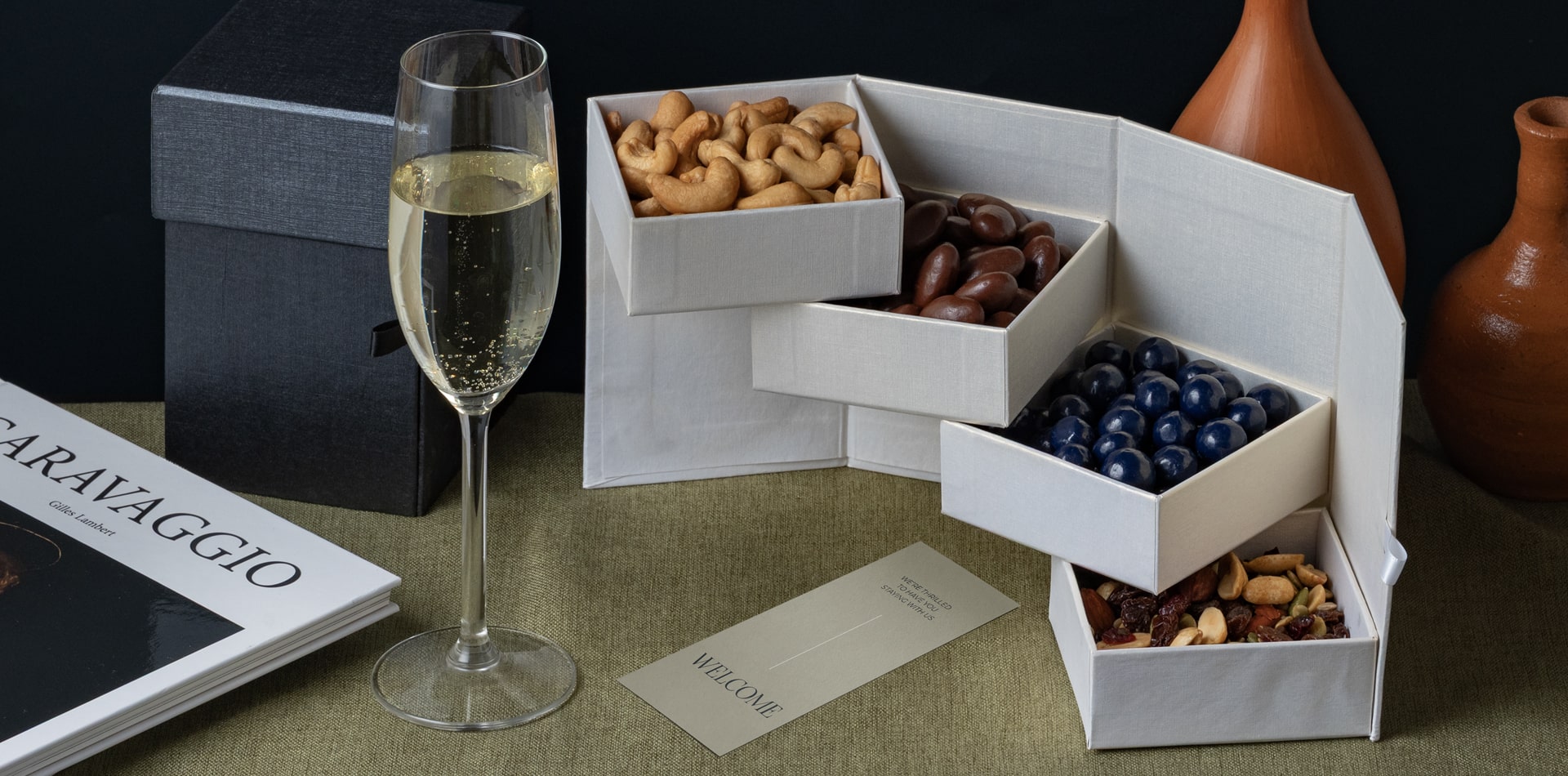
A handcrafted truffle, an organic trail mix, or a beautifully packaged chocolate-covered berries isn’t just a treat, it’s a brand moment. These gestures convey thoughtfulness, pride, integrity, and a genuine care for the guest experience.
The research reinforces a timeless truth: guests remember how a hotel made them feel, and sensory touchpoints—taste, scent, and texture, shaping that emotional memory.
Key Insights from the Study
1. Amenity Quality Defines Luxury and Shapes First Impressions
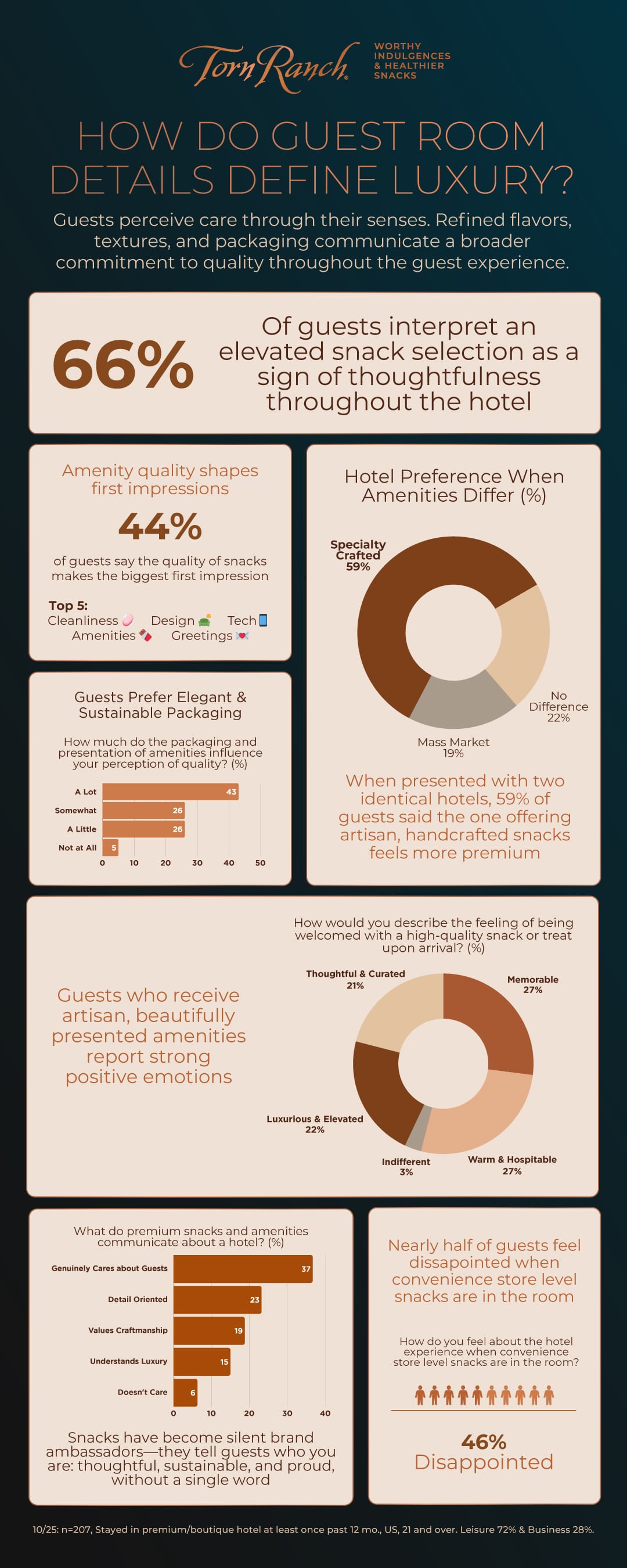
Almost half of the respondents (44%) stated that the quality of amenities or welcome items influences their initial impression of a room. Another 41% identified “high-quality snacks and amenities” as one of the top features that make a hotel feel truly luxurious.
That’s nearly one in two guests, a reminder that first impressions start at the first time a guest walks into the room, or stops at the minibar, not just the front desk.
Guests feel care through their senses. If the flavors, textures, and packaging are refined, they assume the rest of the experience will be too. Premium amenities tell guests they’ve arrived in a place that values craft, thoughtfulness, and consistency.
2. Amenitiy Caliber Reflects the Hotel’s Care
When asked whether snack quality contributes to their impression of a hotel’s care, guests gave an average score of 66 out of 100.
This number signals more than preference, it reflects trust. Guests interpret the quality of amenities as a proxy for the thoughtfulness of the property. A hotel that chooses bespoke, sustainable treats and snacks in a unique and beautiful presentation communicates attention to detail across every level of service.
3. Premium Amenities Create Emotional Connection
Guests who receive artisan, well-presented treats report strong positive emotions, scoring 74/100 in terms of feeling positively about the property.
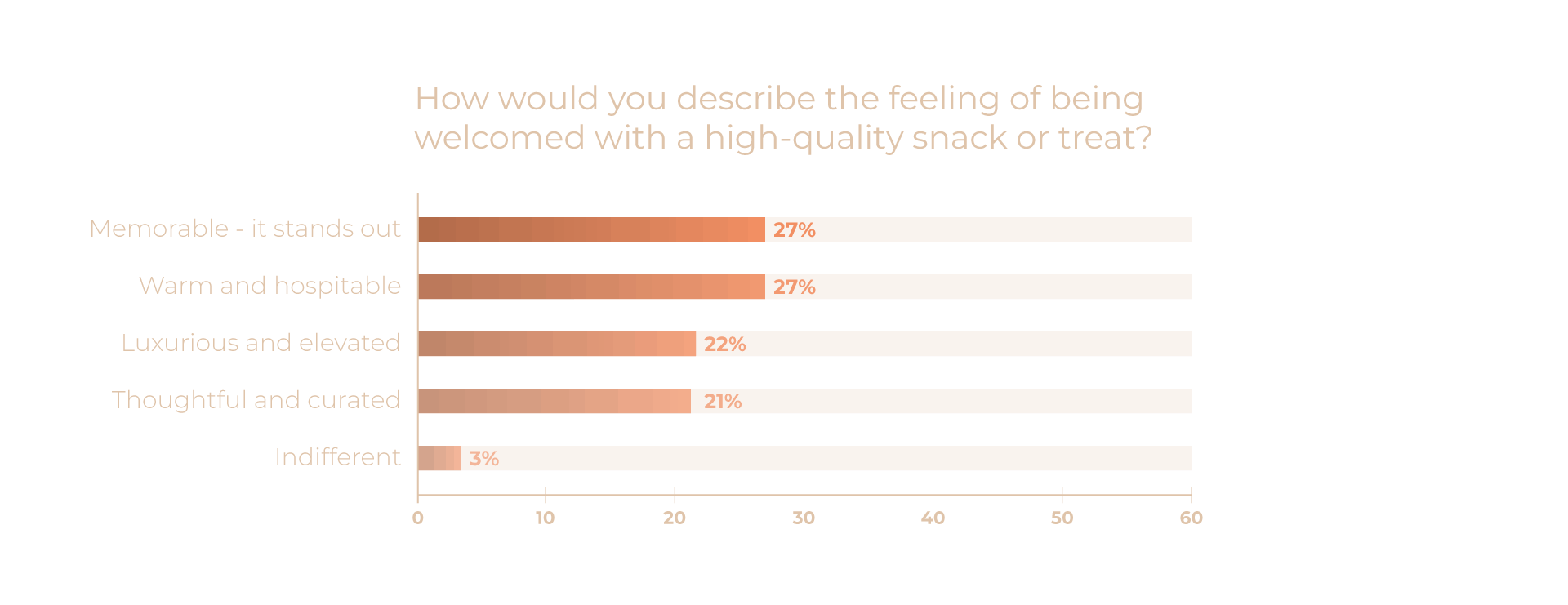
Guests describe a premium welcome snack as memorable and warm, the kind of touch that instantly humanizes a brand. Among 207 respondents, 27% (56) said it’s memorable and it stands out, 27% (55) said warm and hospitable, 22% (45) said luxurious and elevated, and 21% (44) said thoughtful and curated. Only 3% (7) were indifferent. In other words, these small, intentional bites don’t just taste good, they create the feeling of being welcomed.
Emotion is what turns satisfaction into loyalty. A small, thoughtful gesture, such as a handcrafted truffle or an elegant trail mix, helps guests feel seen and valued. Those micro-moments often become the stories they share when they recommend the property.
4. Premium Amenities Influence Hotel Choice
When presented with two identical hotels, 59% of guests said the one offering fresh, handcrafted amenities feels more premium, compared to just 19% who preferred standard packaged items.
In a competitive market, curated gourmet amenities can become decision drivers. The right amenity program differentiates not through extravagance, but through thoughtfulness, signaling that the property curates every aspect of the experience.
5. Mass-Market Amenities Undermine Luxury Perception
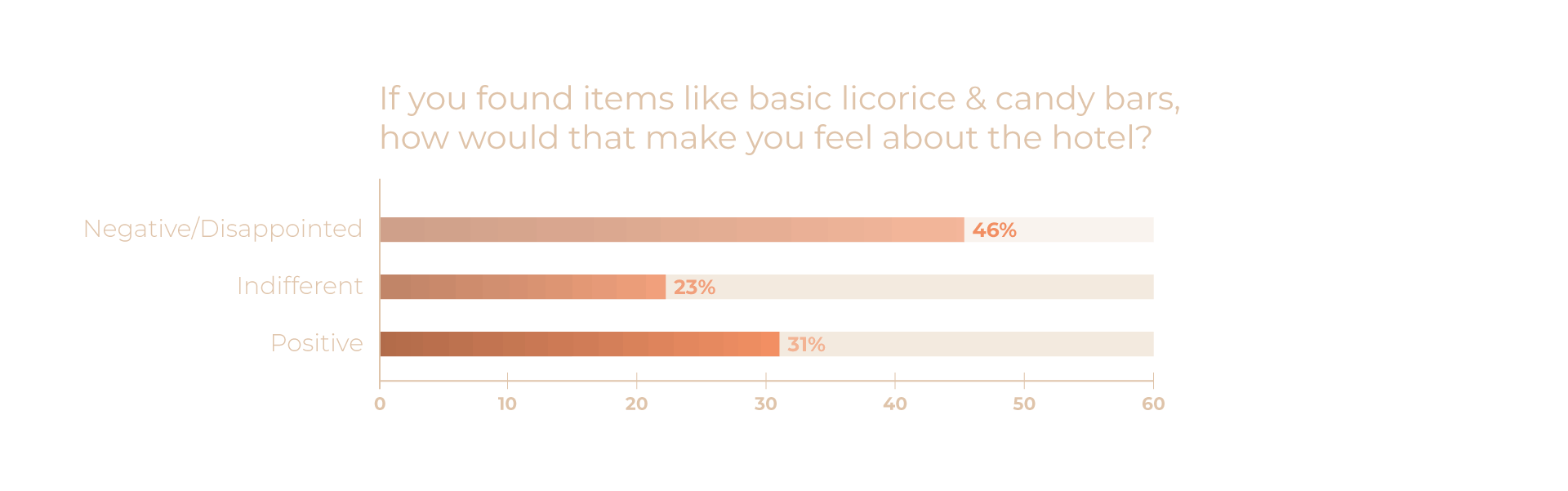
Guests notice when something feels off-brand. The average sentiment score toward finding mass-market, convenience store items in a luxury room was 58/100, with nearly half (46%) describing the experience as “cheap,” “lazy,” or “disappointing”.
Familiarity doesn’t equal positive experience when expectations are high. A single out-of-place food item can diminish the perception of value. For premium travelers, brand alignment is everything, every touchpoint must feel intentional and seamless.
6. Premium Amenities Communicate Brand Values
Guests interpret premium amenities as a reflection of brand character and care. The most common perceptions were that hotels offering premium snacks genuinely care about guest experience (37%), are detail-oriented and consistent (23%), and value craftsmanship and quality (19%). Only 6% said premium snacks “don’t say much”.
Amenities have become silent brand ambassadors—they tell guests who you are: thoughtful, sustainable, and proud, without a single word.
7. Presentation and Packaging Shape Perceived Quality
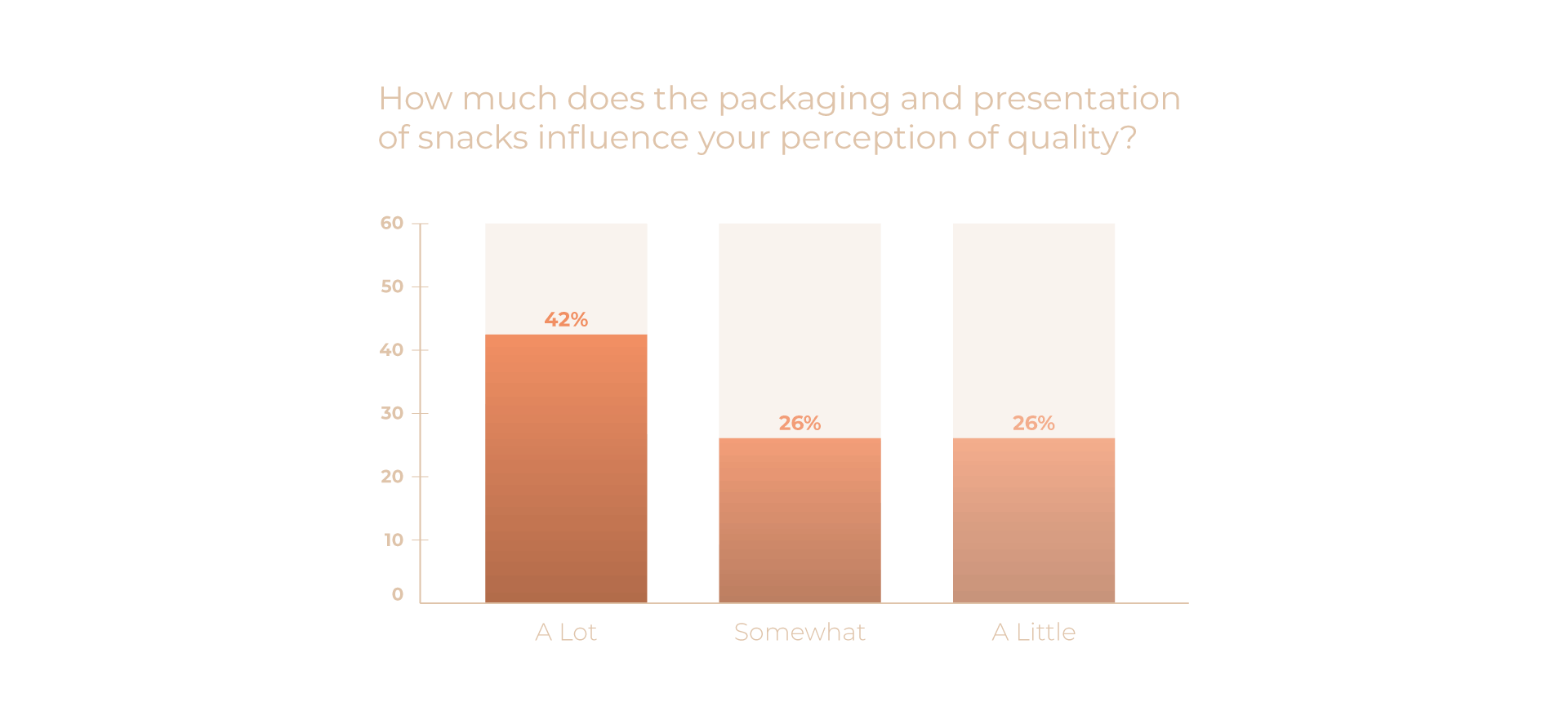
Nearly 70% of guests said packaging affects their perception of hotel quality. Almost half said beautiful, thoughtful packaging “feels premium,” while the other half said it “adds polish and professionalism.”
Room design doesn’t end with décor. Every item’s presentation, from texture to typography, reinforces the brand’s promise of quality. Packaging is storytelling.
8. Guests Prefer Elegant and Sustainable Packaging
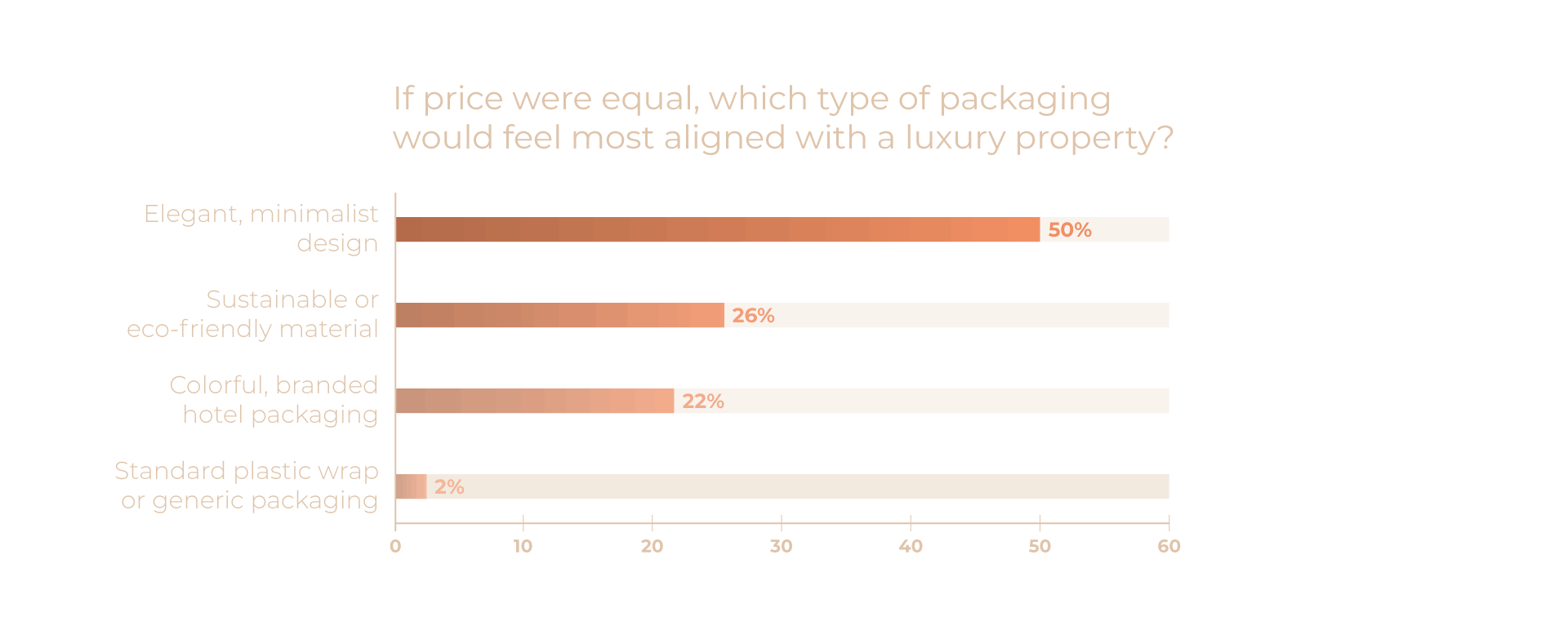
When price is equal, 76% of guests prefer packaging that is elegant, minimalist, or sustainable, compared to just 2% who favor standard plastic.
Modern luxury leans toward restraint and responsibility. Guests increasingly associate eco-conscious choices with care. For them, sustainability is a sign of sophistication. Examples of sustainable packaging are compostable boxes, compostable bags, and glass jars, all plastic-free.
9. Premium Amenities Drive Loyalty and Advocacy
Guests who experienced memorable in-room items reported a 69/100 likelihood of returning to or recommending the property.
Loyalty begins with emotion, not points. A guest who feels valued through detail becomes an advocate, telling friends, writing reviews, and returning for the same experience.
What This Means for Hotels
In hospitality, consistency builds trust, but care builds love. Premium amenities aren’t about indulgence; they’re about intention. They say, “You matter enough for us to care about your experience and choose the best.”
An eco-friendly welcome box or a beautifully presented truffle becomes more than an amenity, it’s a lasting impression.
Frequently Asked Questions
How was the Torn Ranch Hospitality Perception Study conducted?
The study was conducted online using a structured survey distributed to qualified U.S. respondents via a national consumer research panel. All participants were verified to have stayed in a premium or boutique hotel within the previous 12 months.
Who participated in the study?
The sample included 207 U.S. adults aged 21 and older. Of these, 72% identified as leisure travelers and 28% as business travelers, reflecting a realistic mix of boutique and upscale hotel guests. Respondents represented diverse geographic regions and income brackets, ensuring a balanced perspective on modern hospitality expectations.
What methodology ensured accuracy and reliability?
Respondents were screened for recency of travel and exposure to premium hospitality brands to ensure relevant feedback. Questions were randomized to avoid bias.
Why was the study conducted online instead of in person?
An online methodology enabled Torn Ranch to efficiently reach a national audience while maintaining controlled screening and data validation. Online sampling ensured representation from both frequent travelers and occasional luxury guests across the U.S., providing a broad yet accurate reflection of current consumer expectations.
Conclusion: Luxury Lives in the Smallest Details
This study is unmistakably clear that guests notice the details that speak of thoughtfulness and pride. Nearly half pay attention to snack quality as soon as they walk in. Most connect it directly with how much a hotel cares. And those small sensory moments such as taste, texture and presentation influence whether they stay again or recommend the property.
In a market where design and amenities can feel interchangeable, authentic differentiation comes from the emotional cues that are not mass-produced. Premium amenities, beautifully packaged and intentionally placed, tell a story about the brand’s values long before a guest reads a brochure or checks the website.
The takeaway for hospitality brands is simple: curate with purpose. A handcrafted bite, an elegant wrapper, or a sustainable material doesn’t just fill space, it fills meaning. These moments remind guests that true luxury isn’t about what’s offered, but how it makes them feel. And when guests feel cared for, they come back.

Deana Morrow
CEO, Torn Ranch
Deana Morrow is the CEO of Torn Ranch, where she brings together her expertise in hospitality, food, and brand innovation to create memorable, purpose-driven experiences. She loves working with partners to elevate their programs through thoughtful design, premium ingredients, and meaningful presentation.
INTERESTED IN WORKING WITH US?
Send us your details and we'll be happy to start a conversation with you!